










The Dragon: Sovereign of Sky and Water

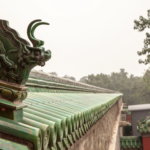
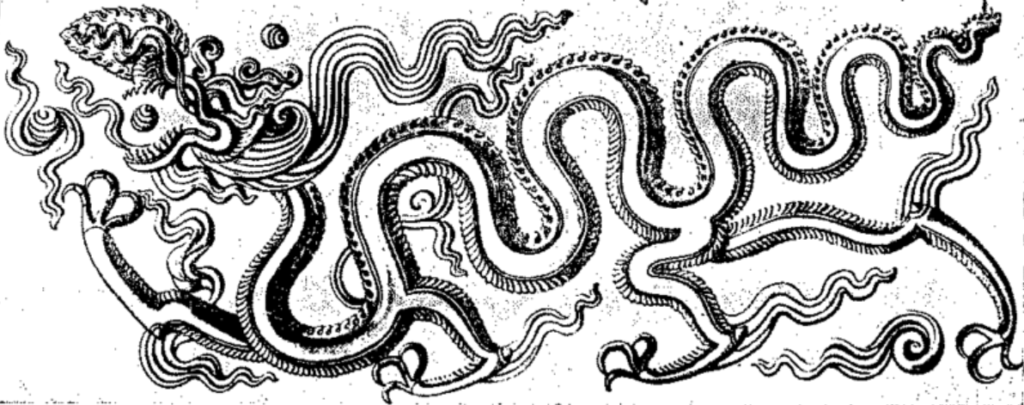
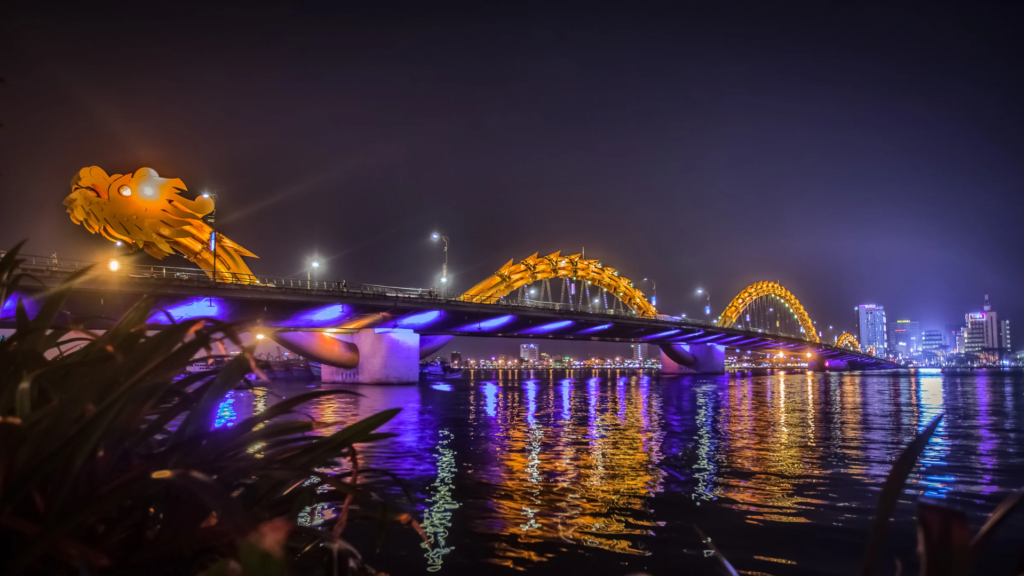
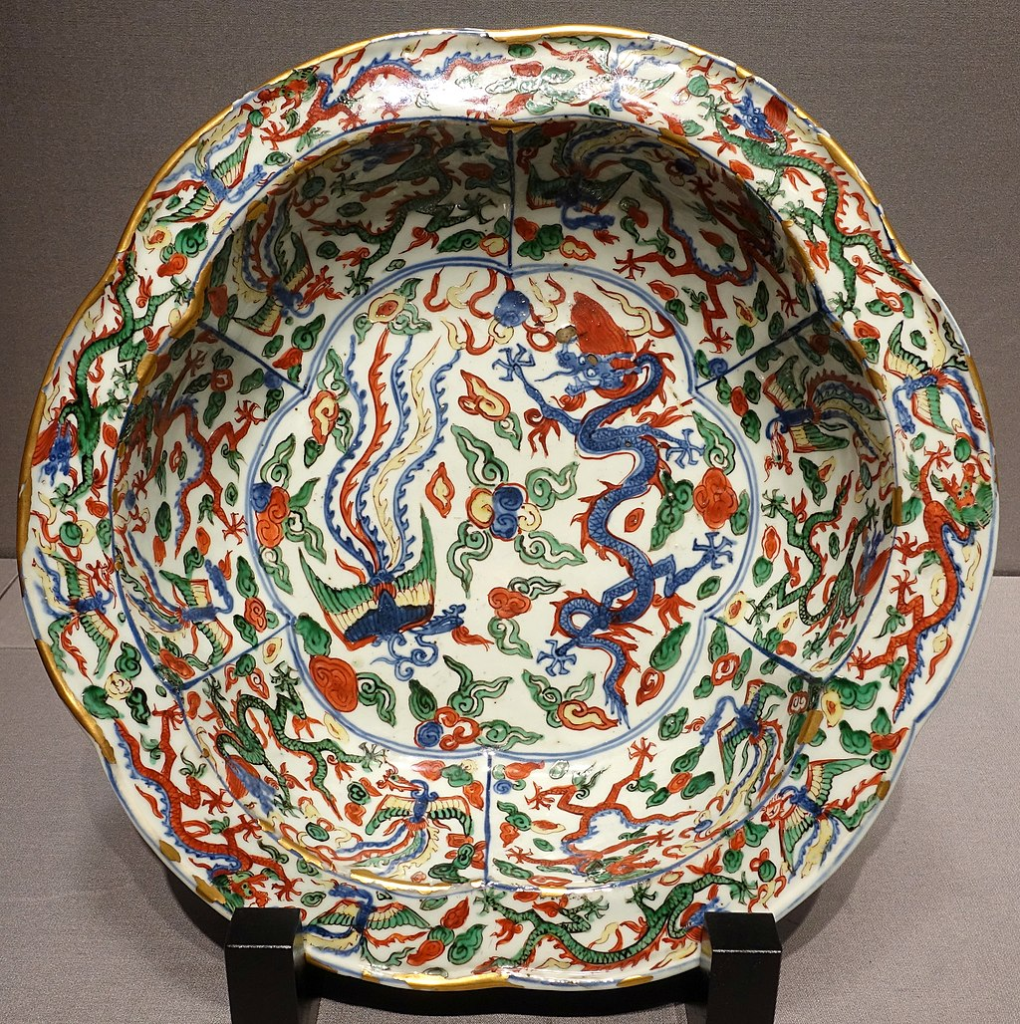
Across the sweeping canvas of Asian art and architecture, no creature commands more reverence than the dragon. Unlike their fire-breathing Western counterparts, Eastern dragons embody benevolent power—celestial beings governing rain, rivers, and imperial authority. In Vietnam’s Đông Sơn bronze drums, their serpentine forms twist like monsoon clouds, while Chinese Ming Dynasty robes embroider five-clawed long dragons as exclusive symbols of the emperor. These creatures operate on a cosmic scale:
- Water Masters: Vietnamese fishermen paint dragon eyes on prows to calm turbulent seas, echoing the Thuồng Luồng river dragon myths.
- Imperial Mandate: The Forbidden City’s 9,999 dragon motifs (one short of heaven’s 10,000) visually asserted the emperor’s divine right.
- Yin-Yang Balance: Korean yong dragons with antlered heads and feathered tails represent the harmonious union of earthly and celestial energies.
The dragon’s morphology itself is a symbolic fusion—camel head, deer antlers, demon eyes, fish scales, eagle claws—a testament to the Asian philosophical ideal of unity in diversity.
The Tiger: Earth’s Fierce Guardian
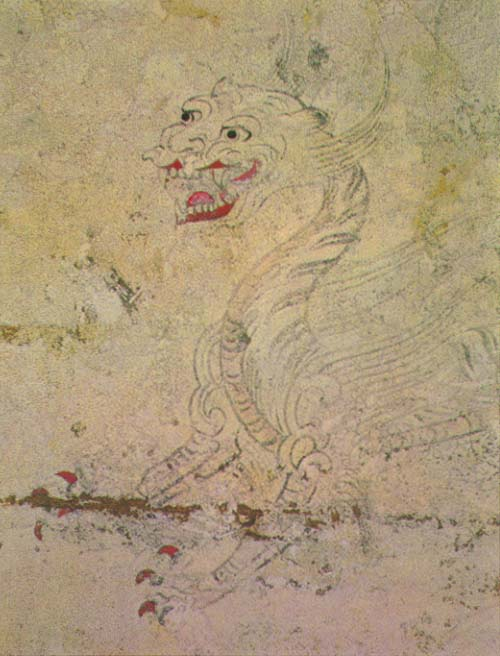
Where dragons rule the skies, tigers patrol the terrestrial realm. In Daoist cosmology, the white tiger (Bạch Hổ) guards the West, balancing the Azure Dragon of the East. This duality manifests vividly in:
- Folk Amulets: Vietnamese children wear tiger claw pendants to ward off evil spirits, while merchants hang tiger paintings to deter thieves—a practice stemming from the belief that tigers punish the unjust.
- Military Symbolism: Japanese samurai wore tiger-skin quivers as emblems of courage, mirroring the Vietnamese legend of general Lê Văn Duyệt who kept live tigers as palace guards.
- Feminine Duality: Hindu-Buddhist traditions depict Durga riding a tiger, representing controlled ferocity—a theme echoed in Cham pottery showing tiger-riding deities.
Unlike the dragon’s celestial abstraction, the tiger’s symbolism thrives on tangible power. A 19th-century Nguyễn Dynasty robe’s embroidered tiger, poised mid-pounce, communicated a ruler’s unyielding authority over the physical world.

Phoenix, Qilin, and Other Mythic Syntheses
Beyond the dragon-tiger dyad, Asia’s mythical menagerie weaves complex allegories:
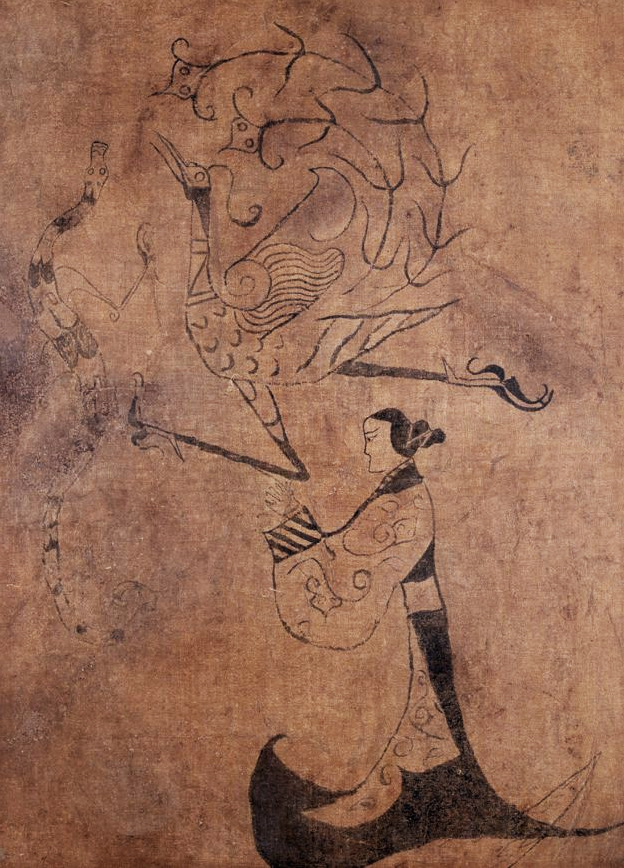
- Phoenix (Fenghuang)
The “August Rooster” of Chinese lore transcends its firebird associations. Vietnamese Lạc bird motifs on Bronze Age artifacts—often misidentified as phoenixes—actually symbolize ancestral spirits. On Champa temple friezes, the phoenix’s tail feathers fan into flames shaped like Sanskrit script, merging Hindu Garuda symbolism with local animism. - Kylin (Qilin)
This chimera with ox hooves and dragon scales epitomizes Confucian virtues. A 15th-century Vietnamese đình communal house carving shows a kylin treading on books—not destruction, but reverence for knowledge. Japanese kirin brewery logos twist this into a symbol of prosperity. - Nāga Serpents
At Angkor Wat, seven-headed nāgas form bridge railings, their bodies arching as rainbows between earth and heaven. In Laos’ Pha That Luang, the nāga’s flared hood shields Buddha, mirroring Vietnamese tales of dragon-kings gifting swords to kings.

Modern Reinterpretations and Cultural Crosscurrents
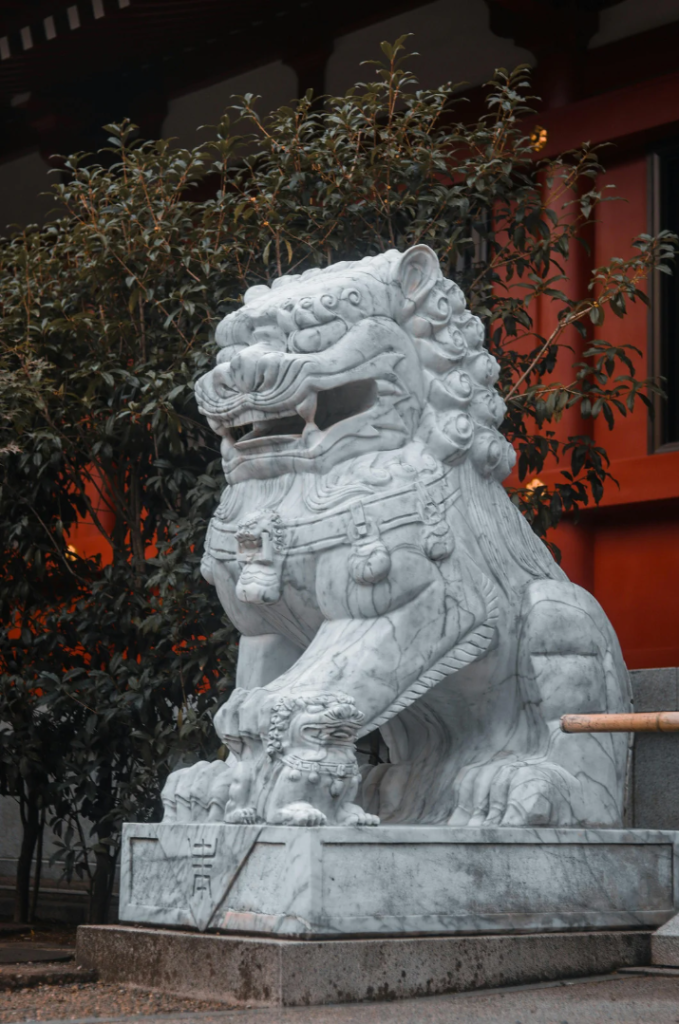
Contemporary designers grapple with these symbols’ layered histories. Singapore’s Merlion statue hybridizes a mermaid with a lion (itself a Persian-imported motif), while Vietnamese lacquerware reimagines tigers in cubist forms. Yet risks emerge:
- Commercial Dilution: Tiger-brand energy drinks reduce the beast to a generic “power” logo, stripping its spiritual context.
- Political Reclamation: China’s “Dragon Rise” rhetoric contrasts with Taiwan’s use of cloud leopard motifs to assert distinct identity.
As ink brush artists in Kyoto and Hanoi still pause before painting a dragon’s pupils—believing this final stroke imbues life—the ancient symbolic language endures, adapting but never losing its soul.
