



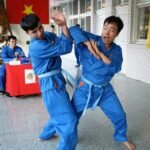


The Development of Vietnamese Women in Sports Through perseverance, tenacity, and a pursuit of equality, Vietnamese women’s sports history is a diverse tapestry. From the earliest days of traditional games to the current competitive sports era, women have had a major influence on the development of Vietnamese athletics. Women used to play folk games that were frequently connected to communal festivities and agricultural activities.
Key Takeaways
- Vietnamese women have a long history of participation in sports, dating back to ancient times when they engaged in traditional games and martial arts.
- Despite facing challenges and barriers such as gender stereotypes and lack of support, Vietnamese women have achieved remarkable success in sports at both national and international levels.
- Notable achievements of Vietnamese women in sports include Olympic medals, world championship titles, and breaking gender barriers in traditionally male-dominated sports.
- Vietnamese women play a crucial role in promoting sports in their communities through coaching, organizing events, and inspiring the younger generation to pursue athletic endeavors.
- Cultural and societal norms continue to impact Vietnamese women in sports, but there is a growing movement towards gender equality and opportunities for women to excel in various sports.
- The future of Vietnamese women in sports holds potential for growth, with increasing support from the government, sports organizations, and the changing attitudes towards women’s participation in sports.
These activities promoted social interaction and cultural expression in addition to physical fitness. As the 20th century dawned, colonialism & the wars that followed had a big impact on women’s involvement in sports. Women started to establish themselves in a variety of sports despite the obstacles presented by political unrest and social conventions. Because it gave women more organized opportunities to participate in sports, the founding of national sports organizations in the 1950s & 1960s was a watershed.
As the first female athletes appeared on the national scene, they set the stage for later generations by participating in sports like gymnastics, swimming, and athletics. Notwithstanding the advancements over the years, there are still many obstacles & difficulties that prevent Vietnamese women from fully participating in sports. The deeply rooted cultural view of gender roles is one of the biggest challenges.
Due to traditional beliefs, women’s athletic endeavors are frequently subordinated to household duties, which results in a lack of support from families and communities. Because they might be expected to fit into preconceived notions rather than pursue their athletic potential, young girls may be deterred from participating in sports by this social pressure. Access to facilities and resources is still a major problem. Finding proper coaching or training facilities is a challenge for many female athletes, especially in rural areas with inadequate sports infrastructure. In addition to impairing their performance, this discrepancy reduces their prospects of competing at a higher level.
The inability of many gifted athletes to secure sponsorship or funding to cover their training and competition costs can also be a major obstacle. We witness a talent drain as a result of systemic barriers that prevent future stars from achieving their goals. Despite these obstacles, there are encouraging success stories that showcase Vietnamese women’s athletic accomplishments. One prominent person is the skilled swimmer Nguyễn Thị Ánh Viên, who has gained recognition both domestically & abroad.
Her multiple gold medals from the Southeast Asian Games & her Olympic participation have made her a national inspiration for young female athletes. Her journey from a small town to the world stage is a prime example of how perseverance & hard work can result in extraordinary achievement. The story of Phạm Thị Huệ, a weightlifter who has broken records and won numerous titles, is another incredible one. In addition to making Vietnam proud, her accomplishments have motivated countless young girls to follow their sporting aspirations.
By showing that women can succeed in traditionally male-dominated fields with support and persistence, these athletes act as role models. Their tales have a profound impact on our communities, inspiring a new generation to reject prejudice and aim high. As advocates for increased participation & change agents, Vietnamese women are vital to the promotion of sports in their communities.
Many women have taken it upon themselves to plan neighborhood sporting events, training sessions, & workshops with the goal of motivating young girls to participate in physical activity through grassroots initiatives. These initiatives not only promote a feeling of belonging but also aid in dismantling barriers by highlighting the advantages of sports for social cohesiveness and personal growth. In addition, female athletes frequently participate in mentorship programs where they impart their knowledge and abilities to young athletes who aspire to be like them.
As coaches or trainers, they instill values like discipline, resilience, and teamwork while enabling the next generation to follow their passions. This knock-on effect fosters a nurturing atmosphere where young girls can flourish, ultimately advancing a more welcoming athletic culture in Vietnam. The way Vietnamese women participate in sports is significantly influenced by cultural and societal norms. Women’s chances to participate in sports may be restricted by traditional views that dictate their primary roles should be focused on taking care of their families and the home.

For women who want to play sports and balance social expectations, this cultural background may cause internal conflicts. As we work through these issues, it becomes clear that creating an atmosphere where women can succeed as athletes requires a shift in perceptions. Also, how women are portrayed in the media greatly influences how society views them in sports. The portrayal of female athletes in the media can either reinforce stereotypes or challenge them. Public perception is shifted and more girls are inspired to play sports when we witness strong, accomplished female athletes being praised in news reports and commercials. On the other hand, a lack of awareness can support the idea that men are the primary participants in sports.
In order to motivate future generations, it is imperative that we push for more equal representation of women in sports media. Vietnamese women’s sports seem to have a bright future ahead of them, with plenty of growth prospects approaching. Globally, there is a growing push for policies that encourage women to participate in sports at all levels as awareness of gender equality continues to grow. In order to level the playing field, government programs that support female athletes through funding, training, and infrastructure development are crucial. Also, cooperation amongst different stakeholders—including educational institutions, athletic associations, & neighborhood associations—can produce an environment that is more encouraging for female athletes.
By cultivating collaborations that give women’s athletic advancement top priority, we can guarantee that young girls have access to high-quality instruction & mentoring opportunities. Also, female athletes can connect with a wider audience and share their stories by using social media and technology to elevate their voices.

In conclusion, although there are still obstacles facing Vietnamese women in sports, the advancements made so far are admirable. The sporting landscape can become more inclusive if we acknowledge their historical contributions, remove obstacles, celebrate their accomplishments, encourage community involvement, question social norms, and seize new opportunities. By working together, we can support Vietnamese women athletes and encourage upcoming generations to bravely and resolutely follow their aspirations.
If you are interested in learning more about the diverse culture of Vietnam, you may enjoy reading the article A Harmony of 54 Ethnic Groups in Vietnam. This article explores the rich tapestry of ethnic groups that make up the population of Vietnam and highlights the unique traditions and customs of each group. It provides a fascinating look at the cultural diversity of the country and how these different groups coexist in harmony.