

Vietnam is home to a rich and diverse spiritual heritage, and one of the most unique and fascinating traditions is Mother Goddess Worship (Đạo Mẫu). This indigenous belief system celebrates the power of divine feminine figures who rule over different realms of nature and human existence.
In 2016, UNESCO recognized Vietnam’s Mother Goddess Worship as an Intangible Cultural Heritage, emphasizing its cultural and artistic value. But beyond its spiritual aspect, this tradition offers a deep insight into Vietnamese history, identity, and artistic expression.
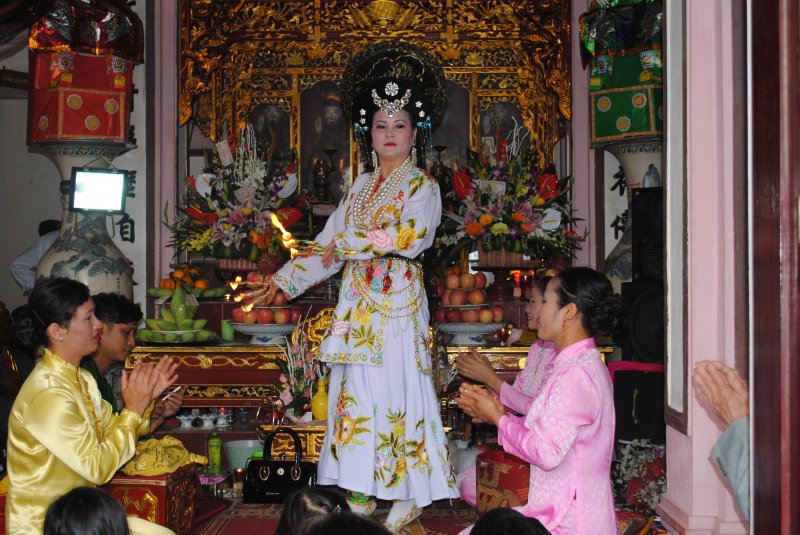
Origins and Historical Development of Mother Goddess Worship
Ancient Roots of the Tradition
Mother Goddess Worship has its roots in Vietnamese folk beliefs, dating back thousands of years. In an agricultural society heavily dependent on nature, people believed in supernatural forces that controlled the land, water, and weather. Female deities were seen as protectors and providers, offering fertility, prosperity, and safety.
Over time, this belief system evolved, integrating influences from Buddhism, Taoism, and Confucianism, while still maintaining its distinct identity. The tradition thrived during the Lê and Nguyễn Dynasties (15th-19th centuries) with many temples built for the goddesses.
Mẫu Liễu Hạnh – The Most Revered Mother Goddess
Among the many deities worshipped, Mẫu Liễu Hạnh is the most famous. People believe she is a celestial fairy who descended to Earth, lived among humans, and later returned to heaven. She symbolizes strength, wisdom, and compassion, making her one of Vietnam’s most beloved spiritual figures.
Mẫu Liễu Hạnh, one of Vietnam’s “Four Immortals,” holds great significance in the country’s spiritual heritage.
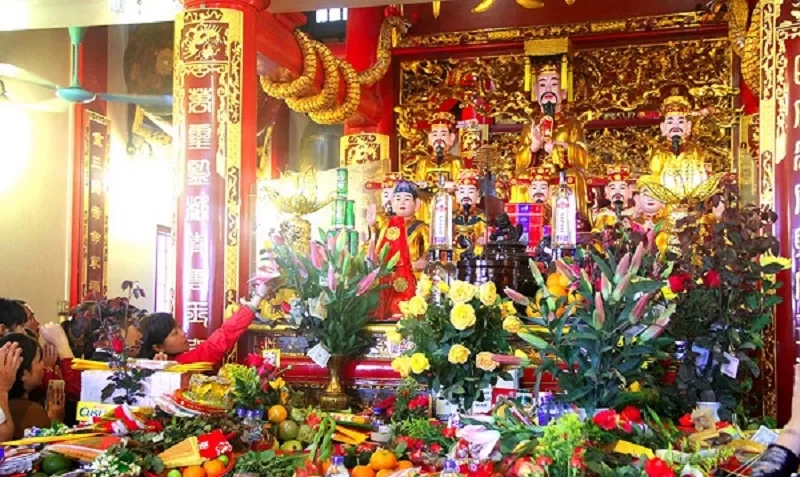
The Four Realms of Mother Goddess Worship (Tứ Phủ System)
Mother Goddess Worship is structured around four main realms (Tứ Phủ), each governed by a different deity. This system reflects the belief in a harmonious balance between nature and humanity.
Heavenly Realm (Thượng Thiên) – The realm of celestial forces, represented by Mẫu Thượng Thiên, who controls the sky and cosmic elements.
Mountain & Forest Realm (Thượng Ngàn) – Governed by Mẫu Thượng Ngàn, the protector of forests, animals, and people in the highlands.
Water Realm (Thoải Phủ) – Ruled by Mẫu Thoải, associated with rivers, lakes, and the sea, symbolizing fertility and abundance.
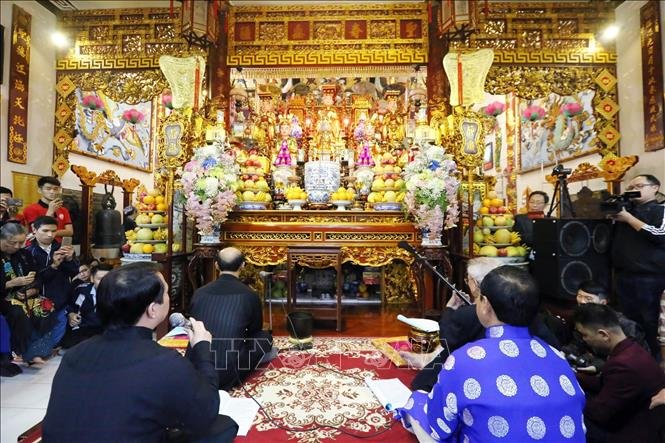
Each realm is further associated with various saints, generals, and spirits, reflecting the deep connection between this belief system and Vietnam’s historical and mythical figures.
Hầu Đồng – The Enchanting Spirit Possession Ritual
A Fusion of Faith, Art, and Performance
One of the most captivating aspects of Mother Goddess Worship is Hầu Đồng, where people believe a medium channels a deity and performs a mesmerizing spiritual ceremony.
This ritual is a stunning mix of music, dance, storytelling, and costume changes, making it one of Vietnam’s most visually spectacular traditions.
What Happens During a Hầu Đồng Ceremony?
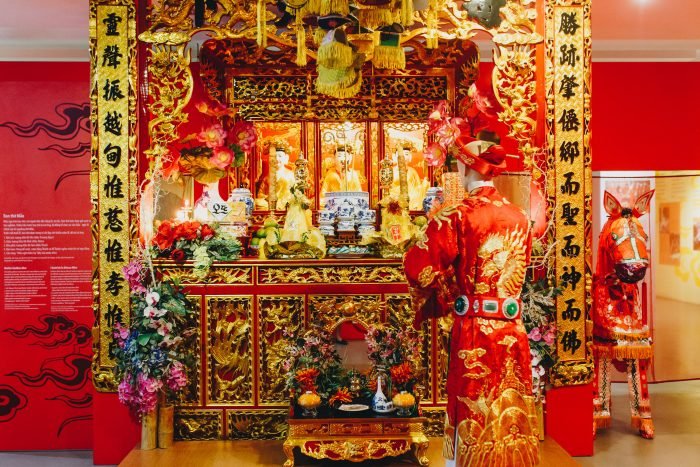
The medium enters a trance-like state through meditation and sacred incantations.
Musicians play Chầu Văn music, a unique spiritual folk genre, to guide the ritual’s rhythm.
The medium changes costumes multiple times, embodying different deities.
Performers execute symbolic dances and gestures to honor each spirit.
People distribute offerings and blessings, including lucky money, food, and flowers, to followers.
This ritual not only serves a spiritual purpose but is also considered a form of traditional Vietnamese performance art, attracting both religious devotees and cultural enthusiasts.
Sacred Temples and Festivals of Mother Goddess Worship
For travelers interested in experiencing this mystical tradition firsthand, visiting one of Vietnam’s sacred temples is a must. Moreover, these sites not only serve as spiritual centers but also as cultural landmarks showcasing stunning architecture and ancient rituals.
Famous Temples of Mother Goddess Worship
- Phủ Dầy (Nam Định Province) – The most significant temple complex dedicated to Mẫu Liễu Hạnh, featuring grand festivals and elaborate ceremonies.
- Sòng Sơn Temple (Thanh Hóa Province) – A historically important site that attracts thousands of pilgrims.
- Bảo Hà Temple (Lào Cai Province) – Known for worshiping Ông Hoàng Bảy, a figure closely associated with the Mother Goddess tradition.
- Hùng Temple (Phú Thọ Province) – Blending the worship of Vietnamese ancestral kings with Mother Goddess beliefs.
Major Festivals
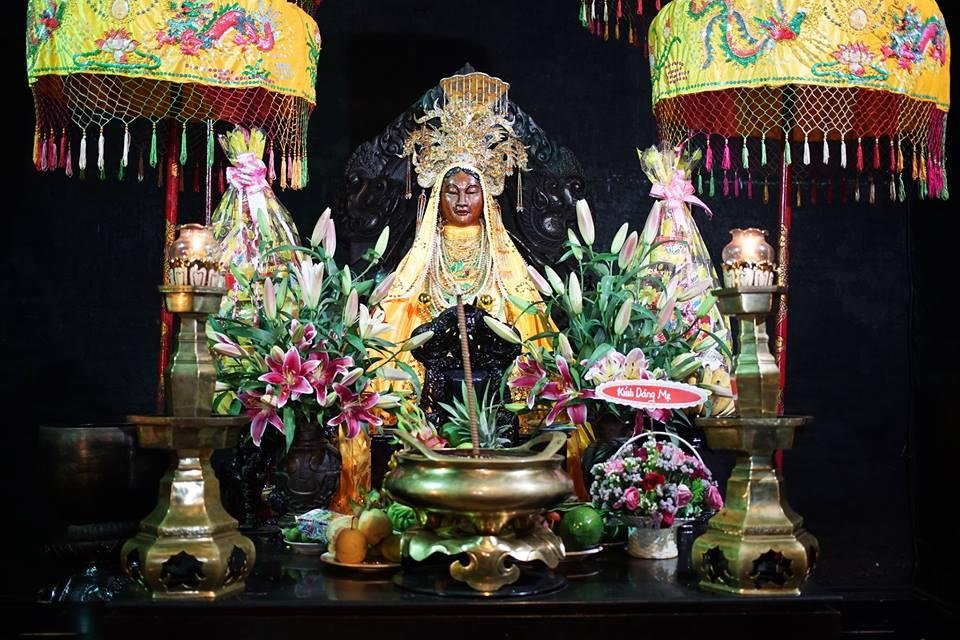
Every year, large festivals celebrate Mother Goddess Worship, attracting both local and international visitors. The most famous is the Phủ Dầy Festival, where visitors can witness grand Hầu Đồng performances, folk games, processions, and sacred rituals.
Conclusion
Mother Goddess Worship is more than just a religious practice—it is a living, breathing cultural phenomenon that embodies the spiritual depth, artistic beauty, and historical resilience of Vietnam.
Whether you are a history lover, spiritual seeker, or cultural enthusiast, exploring this tradition will provide you with a deeper appreciation of Vietnam’s rich heritage.